 Better Photos Guide
 If you’re looking for wildlife photography gear for beginners, here’s the honest truth: most guides either show you a pro photographer’s $30,000 kit, or they list products like a shopping catalog with no real-world context about what it’s actually like to carry this stuff, buy it used, or live with the decision for five years.
This guide is built differently. It’s based on:
- Analysis of what’s actually at the top of Google for “wildlife photography gear”
- Cross-referencing thousands of discussion threads on r/photography, r/wildlifephotography, and r/birding
- Real used-market prices from MPB and KEH
- And most importantly — the stuff experienced photographers argue about in forums that never makes it into polished blog posts
What follows is three budget tiers ($1,000, $2,500, and $5,000), built with real trade-offs, honest caveats, and the kind of friction you’d only know about if you’ve actually carried a 6lb lens-and-body combo up a hill.
Which Budget Tier Matches Your Situation?
| Budget | Best For | Effective Reach | Jump To |
|---|---|---|---|
| $1,000 | First wildlife kit, testing the waters | 225-900mm (used APS-C + used lens) | Kit #1 |
| $2,500 | Dedicated hobby, bird photography, planned trips | 225-750mm (new mirrorless APS-C) | Kit #2 |
| $5,000 | Semi-professional, low-light, publishable images | 200-900mm including teleconverter | Kit #3 |
A $1,000 wildlife kit exists. But it’s $1,000 used, and it involves gear that weighs almost 7lbs. If you’re expecting a lightweight modern mirrorless setup at that price, you’re looking at another $1,000. That’s the first reality check most guides skip.
How Much Does Wildlife Photography Gear Really Cost?
The biggest source of confusion in beginner forums is not which brand to buy — it’s the total cost. Most guides quote camera body prices and lens prices separately, leaving beginners to discover the accessories cost later as a surprise.
A complete wildlife photography gear setup needs these components, with realistic price ranges:
- Camera body — $400–$2,000+
- Telephoto lens — $300–$13,000
- Memory cards — $30–$100
- Extra batteries — $50–$150
- Tripod or monopod — $100–$600
- Camera bag — $50–$200
The pattern across thousands of forum threads: most beginners underestimate the total cost by 30-50% because they only budget for the camera and lens. If you’re planning a $1,000 budget, you’re really shopping for about $700 of camera and lens, with the rest eaten up by the stuff you need to actually use them.
The 3 Most Important Decisions You’ll Make
Based on community discussion patterns, these three decisions come up repeatedly as the ones that determine whether a beginner is happy with their first kit or ends up buying twice within a year.
1. Camera Body: APS-C vs Full-Frame
This is one of the most debated topics on r/wildlifephotography. The practical consensus: for a first wildlife kit, APS-C (crop sensor) gives more reach per dollar. A 400mm lens on APS-C behaves like 600mm on full-frame due to the 1.5x crop factor. The trade-off is lower performance in very low light, but most wildlife photography happens during daylight hours anyway.
What experienced photographers note: they shot APS-C for years before switching to full-frame, and the switch was driven by specific needs (low-light, shallow depth of field) rather than a general upgrade.
2. Lens: The Component That Determines What You Can Shoot
Across every photography forum analyzed, the single most repeated piece of advice is: spend more on the lens than the body. A camera body affects image quality at the margins, but the focal length determines what subjects you can actually capture.
The minimum recommended focal length for wildlife is 300mm effective (450mm on APS-C). For bird photography specifically, 500-600mm effective is the range most photographers consider the real starting point. Below that, you’ll spend a lot of time cropping and being frustrated.
3. Lens Mount Systems: The Decision That Locks You In for 5-10 Years
This is the most under-discussed topic in beginner gear guides, and it’s arguably the most important decision you’ll make.
Your lens mount system determines which lenses you can use, and switching systems is expensive.
- If you buy Sony E-mount lenses, you cannot use them on a Canon or Nikon body
- Switching systems means selling every lens you own and rebuying — expect to lose 20-40% in transaction costs
- Canon RF mount is not open to third-party manufacturers (Sigma, Tamron) — your future lens options are limited to Canon’s own lenses, which are excellent but expensive
- Sony E-mount is fully open, but there’s a gotcha: full-frame FE lenses work fine on APS-C bodies, but APS-C E-mount lenses leave you with unusably low resolution if you ever upgrade to full-frame
- Nikon Z-mount is newer — used lens availability is thinner than Sony or Canon
What this means for a beginner: If you buy Canon RF right now, you’re betting on Canon releasing affordable telephoto lenses in the future (they’ve been slow so far). If you buy Sony E, you have the most third-party lens options, but you need to decide upfront whether you’ll stay APS-C or eventually go full-frame. If you buy a used DSLR system (Nikon F or Canon EF), you get great prices now but the technology is end-of-life.
This is not a reason to overthink your decision. It is a reason to understand that you’re not just buying a camera — you’re joining an ecosystem.
Budget Tier 1: Entry-Level Wildlife Kit (~$1,000)
This tier focuses on used DSLR equipment. At this budget, you’re buying gear that was pro-level 8-10 years ago but is now available for a fraction of its original price. The used market for DSLR gear has improved significantly as photographers migrate to mirrorless, creating excellent value for budget buyers.
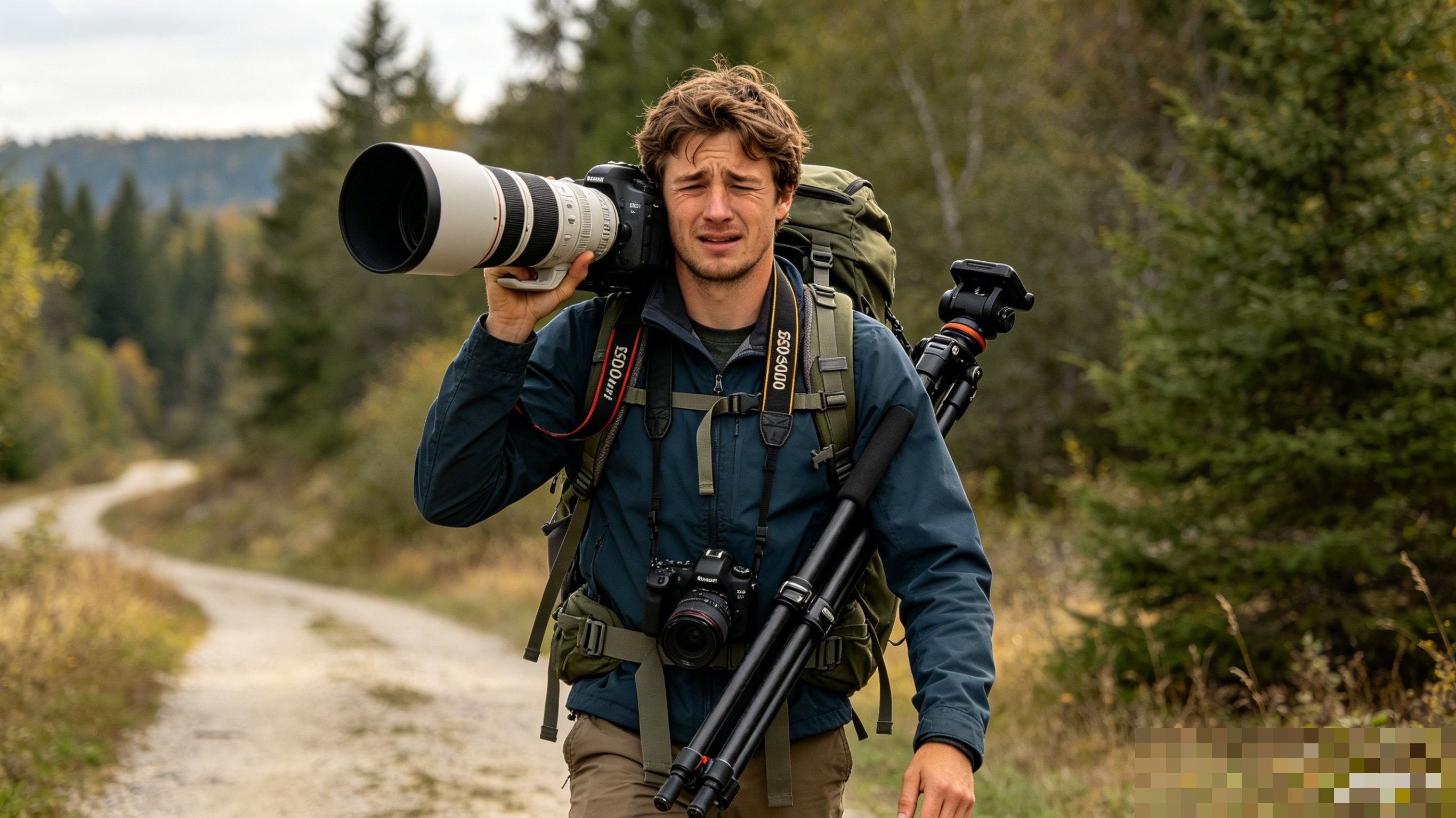
But let’s be honest about what this means physically: the Nikon D7200 (765g) plus the Sigma 150-600mm (1,930g) puts you at nearly 6lbs of gear before you add a tripod, bag, and accessories. That’s a respectable workout to carry on a hike. A 60-year-old retiree and a 25-year-old in good shape will have very different opinions about whether this kit is “portable.” Keep that in mind.
Camera Body Options (Used Market)
| Camera | Weight | Market Price (Used) | Forum Consensus Notes |
|---|---|---|---|
| Nikon D7200 | 765g | $400–$500 | Widely recommended on r/wildlifephotography as best value APS-C DSLR. Good AF system, rugged build. |
| Canon EOS 7D Mark II | 910g | $450–$550 | Faster burst (10fps), better weather sealing. Heavier body. Preferred by bird photographers. |
| Sony A6100 | 396g | $500–$600 | Only mirrorless option at this price. Real-time animal eye tracking. Much lighter but smaller grip for big lenses. |
Lens Options (Used Market)
| Lens | Weight | Market Price (Used) | Effective Reach (APS-C) |
|---|---|---|---|
| Sigma 150-600mm f/5-6.3 Contemporary | 1,930g | $600–$750 | 225-900mm |
| Tamron 100-400mm f/4.5-6.3 Di VC USD | 1,135g | $500–$650 | 150-600mm |
| Canon EF-S 55-250mm f/4-5.6 IS STM | 375g | $150–$200 | 88-400mm |
Real Talk About the Sigma 150-600mm
This lens gets recommended constantly — including in this guide — because it genuinely delivers 600mm reach at an affordable price. But a balanced recommendation includes the things current owners complain about:
- Zoom mechanism sucks in dust. This is the most common complaint about the Contemporary version. The zoom barrel extends and retracts, and over time, it pulls in dust. Some users report visible dust spots inside the front element within a year. The Sports version is sealed better but costs almost twice as much.
- f/6.3 at 600mm means you need good light. In practice, this means your keepers in golden hour or forest canopy will be limited. You’ll be pushing ISO higher than you’d like.
- It’s genuinely heavy. At 1,930g (4.3 lbs) for just the lens, plus ~765g for the camera body, you’re holding about 6lbs. Hand-holding for more than 30 minutes gets uncomfortable. This lens really needs a monopod or tripod for extended use.
- The Sports version is much better built and sealed, but at $900–$1,100 used, it nearly doubles the budget of this tier.
None of this means “don’t buy it.” It means understand what you’re getting into. The lens is still the best value in budget wildlife photography — but it’s a value proposition, not a perfect lens.
How to Actually Buy Used Gear (A Beginner’s Guide)
“Just buy used” is easy to say and harder to do well. Here’s what you actually need to know:
- MPB and KEH are the most recommended sources. They grade their gear (Excellent, Good, Bargain) and offer return policies. KEH’s “Bargain” grade is usually cosmetically rough but functionally fine. MPB’s condition ratings are more conservative.
- r/photomarket has better prices but zero buyer protection — pay with PayPal Goods & Services, not Friends & Family
- Shutter count matters for DSLRs. Under 50,000 is low usage (most DSLRs are rated for 150,000+). Ask the seller for a shutter count before buying.
- Check for: fungus in the lens (hold it up to light), dead pixels on the sensor (take a photo at f/16 of a white wall), damaged lens mount screws, and for DSLRs specifically — cracked mirrors (common on some Nikon models)
- Lens zoom operation: extend and retract the zoom fully — it should move smoothly with no grinding or sticking
If all of this sounds intimidating: buy from MPB. You’ll pay 10-15% more than private sale, but they handle the inspection, warranty, and returns. For a first purchase, that peace of mind is worth it.
Example Build at This Tier
| Component | Suggested Option | Weight | Estimated Cost |
|---|---|---|---|
| Camera | Nikon D7200 (used) | 765g | $450 |
| Lens | Sigma 150-600mm f/5-6.3 C (used) | 1,930g | $650 |
| Memory card | SanDisk Extreme Pro 64GB SD | — | $25 |
| Bag | Lowepro Tahoe BP 150 | — | $55 |
| Extra battery | Wasabi Power 2-pack | — | $30 |
| Tripod | Used Sirui or K&F Concept aluminum | ~1,500g | $80 |
| Total | ~4.2kg (9.2lbs) in bag | ~$1,290 |
Total system weight is roughly 9-10lbs when packed in a backpack with the tripod strapped on. That’s manageable for short hikes but significant for full-day trips. If you have back issues or plan to hike miles to your shooting locations, consider whether this weight is sustainable for you.
Note on budget: Reaching a true $1,000 total at this tier requires buying both body and lens used. The Sigma 150-600mm used is the highest-value lens for budget wildlife photography — the 900mm effective reach on APS-C is a capability that normally costs several times more.
What this tier can capture: publishable images of large mammals at 50-100 yards, birds at close-to-moderate range in good light. The main limitation is low-light performance — dawn and dusk shooting requires high ISO, which means more noise in your images.
Budget Tier 2: Enthusiast Wildlife Kit (~$2,500)
At this budget, modern mirrorless cameras with animal eye-tracking AF become accessible. This is the tier most frequently recommended on r/photography as the “sweet spot” for someone who knows they want to pursue wildlife photography seriously.
Weight note: The Sony A6700 (493g) + Tamron 150-500mm (1,710g) = about 4.9lbs body+lens. That’s a full pound lighter than the $1,000 kit. The weight difference between entry-level DSLR and modern mirrorless at this tier is significant and noticeable on a long hike.
Two Routes at This Budget
| Component | Route A: Canon | Route B: Sony |
|---|---|---|
| Camera | Canon R7 (new, $1,099) | Sony A6700 (new, $1,398) |
| Lens | Canon RF 100-400mm f/5.6-8 ($649) | Tamron 150-500mm f/5-6.7 ($999) |
| Body + lens weight | ~1,500g (3.3lbs) | ~2,200g (4.9lbs) |
| Effective reach | 160-640mm | 225-750mm |
| Body + lens cost | ~$1,748 | ~$2,397 |
One real-world issue about Route B that forum posts love to bring up: the Tamron 150-500mm has a zoom ring direction that’s opposite to Sony’s native lenses. Sony zooms turn counter-clockwise to go wider. Tamron zooms turn clockwise. It sounds trivial, but the first time you’re trying to track a moving animal and you twist the zoom ring the “wrong” way, you’ll lose the shot. You get used to it in a few weeks, but it’s a real friction point that no sponsored review mentions.
The Canon route leaves more budget for accessories and is significantly lighter. The Sony route provides more reach and better animal eye-tracking AF. Both systems receive strong community support — but if you choose Canon RF, be aware that third-party lens options are currently very limited since Canon hasn’t opened the RF mount.
Example Build at This Tier
| Component | Suggested Option | Estimated Cost |
|---|---|---|
| Camera | Sony A6700 (new) | $1,398 |
| Lens | Tamron 150-500mm f/5-6.7 (new) | $999 |
| Memory card | Lexar Professional 128GB SD | $35 |
| Extra battery | Sony NP-FZ100 (genuine) | $78 |
| Tripod | K&F Concept 62-inch aluminum | $95 |
| Camera bag | Peak Design Everyday Sling 6L | $110 |
| Total | ~$2,715 |
Buying the body and lens used can reduce this total to approximately $2,000 — a commonly cited target in forum budget discussions. The A6700 is relatively new so used inventory is thin, but you can find it.
Budget Tier 3: Serious Wildlife Kit (~$5,000)
At this level, the conversation shifts from APS-C to full-frame, and from consumer-grade zooms to professional-grade glass. This is where equipment starts to become a limiting factor less frequently — meaning the photographer’s skill matters more than the gear.
Weight reality check: The Sony A7 IV (658g) + Sony 200-600mm (2,115g) + gimbal head + tripod puts your total kit at 7+ lbs before adding a bag. This is not a walk-around setup. It’s a “drive to a location, hike a short distance from the car, and shoot from a fixed position” setup. If you see photos of someone carrying a 600mm f/4 lens through a forest, they’re either paid to do it or in significantly better shape than most of us.
Camera Body Options (Used Full-Frame Mirrorless)
| Camera | Weight | Market Price (Used) | What It Offers |
|---|---|---|---|
| Sony A7 IV | 658g | $2,200 | 33MP, reliable AF, good all-rounder for wildlife enthusiasts |
| Canon EOS R6 Mark II | 670g | $2,100 | 40fps burst, strong AF tracking, preferred by action shooters |
| Nikon Z6 III | 670g | $2,000 | 24MP, excellent IBIS, good value in the Nikon system |
Example Build at This Tier
| Component | Suggested Option | Weight | Estimated Cost |
|---|---|---|---|
| Camera | Sony A7 IV (used) | 658g | $2,200 |
| Lens | Sony 200-600mm f/5.6-6.3 G (used) | 2,115g | $1,600 |
| Teleconverter | Sony 1.4x TC | — | $400 |
| Memory card | Sony TOUGH CFexpress Type A 80GB | — | $100 |
| Extra batteries | 2x Sony NP-FZ100 (genuine) | — | $156 |
| Tripod + gimbal head | Used Sirui + Benro GH2 | ~2,500g | $350 |
| Camera bag | Think Tank Glass Limo | — | $170 |
| Rain cover | OP/TECH Rainsleeve | — | $15 |
| Total | ~5.3kg (11.6lbs) in bag | ~$4,991 |
The Sony 200-600mm is one of the most frequently recommended wildlife lenses across forums. The main critique found in discussions is weight — at 4.5 lbs, it’s not a lens you want to hand-hold for extended periods, which is why the gimbal head and tripod are included in this build. It’s a phenomenal lens, but it lives on a tripod, not in your hands.
The Hidden Cost of “Start Cheap, Upgrade Later”
Most budget guides implicitly recommend the “start cheap and upgrade” path. It sounds sensible. But here’s what that path actually costs:
| Scenario | Path | Total Spent Over 3 Years |
|---|---|---|
| Start cheap | $1,000 kit → realize you’re serious → sell at 30% loss → buy $2,500 kit | ~$3,200 ($300 lost to depreciation) |
| Buy once | Save longer → $2,500 kit directly | ~$2,500 |
| Jump to pro | $2,500 kit → outgrow in 2 years → sell → $5,000 kit | ~$5,700 ($700 lost to depreciation) |
This isn’t meant to scare you into spending more. It’s to show that the “start cheap” advice comes with an actual cost. Whether that’s worth it depends on whether you’d rather have $300 less spent or get into wildlife photography 6 months sooner. Both are valid — but guides rarely tell you about that $300 loss.
The sweet spot for most people: start at the $1,000 tier if you’re truly unsure whether you’ll stick with it. Start at the $2,500 tier if you know this is for you and you want to avoid buying the same thing twice.
Budget Allocation: How the Money Should Be Distributed
One pattern that emerged from analyzing forum discussions is that most first-time buyers allocate their budget poorly — typically spending too much on the camera body and not enough on the lens and support system.
Here’s a framework based on what experienced wildlife photographers recommend:
| Budget Level | Lens | Camera Body | Accessories |
|---|---|---|---|
| $1,000 tier | ~45% | ~35% | ~20% |
| $2,500 tier | ~40% | ~40% | ~20% |
| $5,000 tier | ~35% | ~45% | ~20% |
But here’s the thing about budget allocation in the real world: It’s rarely a one-time decision where you sit down and distribute money perfectly. Most people buy in stages:
- First, they buy a camera body with a kit lens (or just a body if they’re planning ahead)
- Then they realize they need a telephoto lens and buy one
- Then they discover the cheap tripod they already own isn’t stable enough at 500mm and buy a better one
- Then the bag doesn’t fit the new lens, so they buy a bigger bag
That’s not wrong — it’s how most people actually build their kit. The budget allocation table above describes the final state, not the buying order. If you’re buying incrementally, prioritize the lens first, then the tripod, then the bag and accessories.
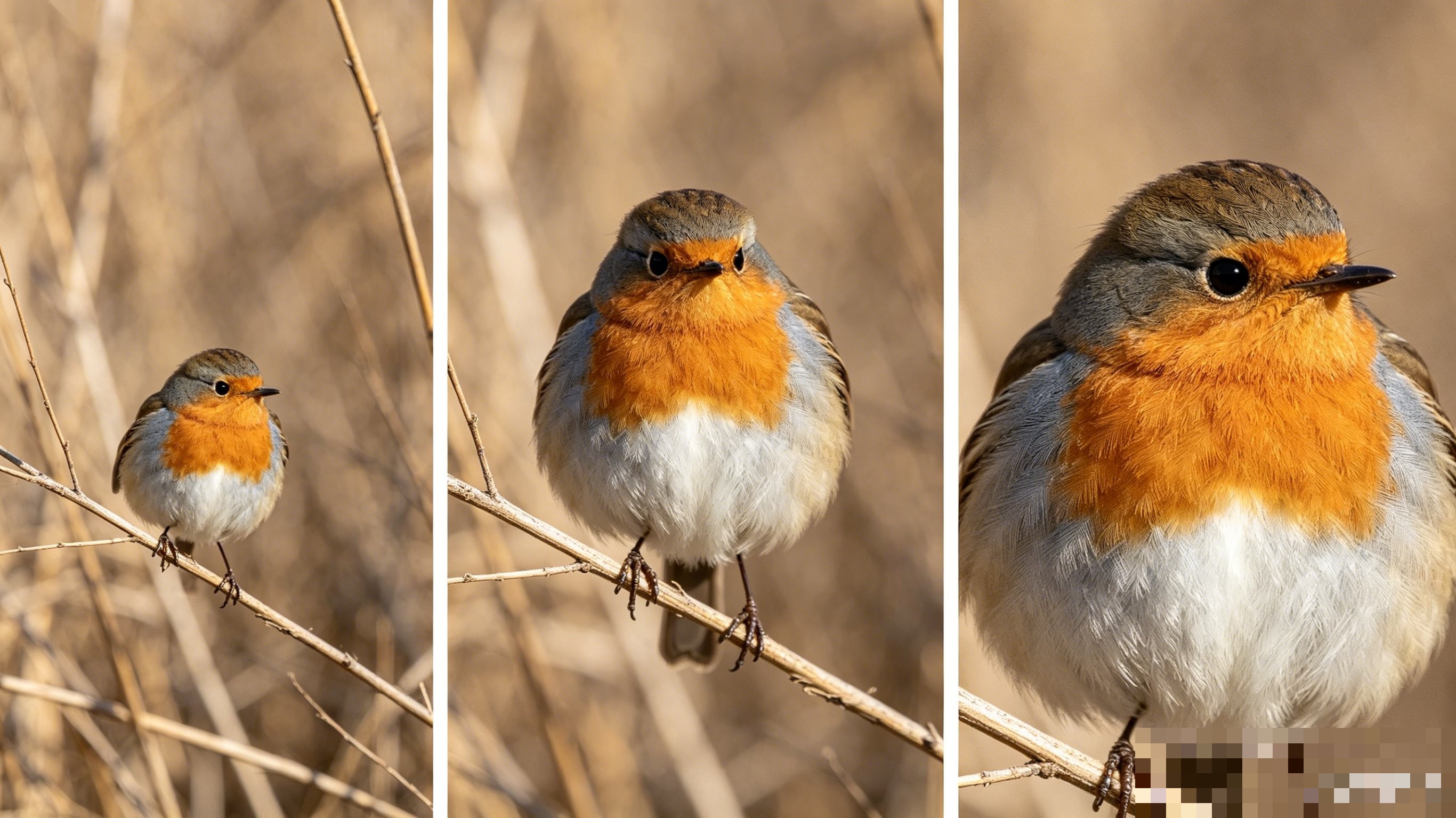
Three Focal Length Strategies
| Strategy | Focal Range | Best For | System Cost |
|---|---|---|---|
| Portable Zoom | 70-300mm | Large mammals, travel, zoo visits | $300–$800 |
| Maximum Reach Zoom | 150-600mm | Birds, small mammals, safari | $600–$1,500 |
| Professional Prime | 400mm f/2.8 or 600mm f/4 | Professional use, low-light, maximum image quality | $6,000–$13,000 |
Perhaps the real question is: how much do you want to compromise? The 150-600mm range covers the broadest range of wildlife scenarios for the least money. It’s heavy, but it works. The 70-300mm is fine for large mammals but creates immediate buyer’s remorse when you try to photograph birds. The primes are optically incredible but financially painful.
What About Canon vs Sony vs Nikon? (The Brand Lock-In Question)
Every beginner asks this, and every guide has a different answer. Here’s the real trade-off stripped of brand allegiance:
- Sony E-mount: Most lens options (including third-party). Best animal eye-AF. Clear upgrade path from APS-C to full-frame within the same mount. The safe choice for someone who wants flexibility.
- Canon RF: Excellent native lenses, beautiful color science, best ergonomics. But Canon hasn’t opened RF to Sigma/Tamron, so your budget lens options are limited. If Canon releases affordable RF telephoto options, this concern goes away. If they don’t, you’re stuck with expensive L-series glass.
- Nikon Z: Great value bodies (the Z6 III at $2,000 used is a steal). Nikon has allowed some third-party lenses (Tamron adapted designs). Growing system but thinner used market than Sony or Canon EF.
- Used DSLR (Nikon F / Canon EF): Best value per dollar right now. Huge used lens selection. But the technology is end-of-life — you’re buying into a system with no upgrade path beyond what already exists.
The actual advice: If you’re on a tight budget, used DSLR (Nikon D7200 + Sigma 150-600mm) gives you the most capability per dollar and the lowest commitment — you can sell the whole kit for close to what you paid if you decide wildlife isn’t for you. If you’re planning to be in this hobby for 5+ years, Sony E-mount is the safest long-term bet due to lens availability and upgrade paths.
Common Beginner Gear Complaints Found in Photography Forums
These patterns appeared consistently across multiple forum discussions about first wildlife gear purchases:
The Canon EF 75-300mm Warning
This lens generates more negative threads on r/photography than any other budget telephoto. The consistent complaints: soft images at 300mm, slow autofocus, and no image stabilization. The most commonly suggested alternative is the Canon EF-S 55-250mm IS STM (used, ~$150) or stretching to a Sigma 100-400mm (used, ~$500).
Body-First Budgeting
Multiple threads follow the same pattern: a beginner buys a $1,200-$1,500 camera body and pairs it with a $200 kit lens, then posts frustrated results asking “why aren’t my wildlife photos sharp?” The consistent response: a $600 body with a $1,000 lens produces better wildlife images than the reverse.
Under-Budgeting the Tripod
Forums have numerous threads asking “is this $50 tripod good enough for wildlife?” At 500mm effective or above, a cheap tripod creates visible vibration issues even in mild wind. The recommended minimum is a used aluminum tripod in the $80–$120 range. If your tripod budget is under $50, save up before buying — that $50 will be wasted.
What Fits in What Bag
A real-world issue that almost never appears in gear guides: the Sigma 150-600mm is a big lens — 260mm (10.2 inches) long when retracted, 290mm (11.4 inches) at 600mm. It does not fit in a standard “camera bag” designed for a body + kit lens. You need a bag specifically sized for a telephoto setup. Many beginners buy a bag first, then discover their new lens doesn’t fit.
If you’re buying the Sigma 150-600mm (or any lens of similar size), check the bag’s internal dimensions before purchasing. The Lowepro Tahoe BP 150 mentioned in our Kit #1 build fits the Sigma 150-600mm mounted on a D7200 with the hood reversed, but just barely. Always verify.
Accessories: What You Actually Need (and What to Skip)
- Tripod: Necessary at 400mm+. Used aluminum in the $80–$120 range is the community-recommended starting point. Skip anything under $50 — it will vibrate, tip over, or break.
- Monopod: A good portable alternative for hiking. Many photographers use both for different situations. A $40 Leofoto monopod is a valid complementary tool.
- Camera bag: A dedicated camera backpack is standard. Measure your lens length before buying. Lowepro and Vanguard are frequently recommended in the $50–$80 range.
- Binoculars: Spotting animals is harder than photographing them. Vortex Diamondback 10×42 is the most frequently recommended budget binocular on photography forums.
- Rain cover: Universal advice — carry a rainsleeve. They cost $10 and fit in any pocket.
- Teleconverters: The most divided topic. A 1.4x TC on a high-quality lens works well. A 2x TC on a consumer zoom is widely advised against — image quality degrades noticeably, autofocus slows significantly, and you lose 2 stops of light.
What to skip as a beginner: wireless remote triggers, lens filters (other than UV protection), lens hoods that cost more than $20, “pro” cleaning kits, and camera straps that cost more than $40. None of these will improve your wildlife images as much as spending that money on a better tripod or an extra battery.
Frequently Asked Questions About Wildlife Photography Gear
These are the questions that appear most frequently in photography forum discussions about first gear purchases. The answers below reflect the community consensus rather than the polished marketing version.
Do I need a full-frame camera for wildlife photography?
No. And honestly, if you’re asking this question, you’re probably better off starting with APS-C. The crop factor gives you extra reach for free — a 400mm lens acts like 600mm. Full-frame matters when you’re shooting in low light consistently, or when you need the shallow depth of field that full-frame provides. Most wildlife beginners shoot during daylight and want more reach, not less. APS-C is the right call for a first wildlife kit.
How much zoom do I need for wildlife photography?
300mm effective for large mammals. 400-600mm for general wildlife. 600mm+ effective for bird photography. This is the community consensus and it hasn’t changed much over the years. If you’re primarily interested in birds, don’t buy a 70-300mm and hope it’ll be enough — you’ll be cropping every shot and hating life.
Should I buy new or used wildlife photography gear?
Used, for your first kit. Camera bodies and lenses from MPB or KEH are the most frequently recommended sources. The reasoning: used gear holds less depreciation risk. A used mid-range lens generally outperforms a new budget lens at the same price. But if the idea of inspecting used gear or dealing with potential issues stresses you out — buy new from a store with a good return policy. Peace of mind has value too.
What’s the best budget lens for wildlife photography?
The Sigma 150-600mm f/5-6.3 Contemporary used at around $650. But before you buy it, understand: it’s heavy (4.3lbs), it’ll suck in dust over time, and the variable aperture means you need decent light. The value proposition is unmatched — 600mm reach for $650 is ridiculous. But it comes with trade-offs that you should know about going in. If you want something lighter, the Canon RF 100-400mm ($649 new) is a solid alternative if you’re in the Canon ecosystem.
Can I use a bridge camera for wildlife photography?
It’ll work in bright daylight. The Nikon P950 has an insane 2000mm equivalent zoom — on paper, that should be incredible for wildlife. But the small sensor means the second you try to shoot at golden hour, in a forest canopy, or on any overcast day, the noise is going to frustrate you. Bridge cameras work as a learning tool, and many birders use them for documentation. But if you’re hoping for images you’d want to print or share beyond social media, you’ll outgrow a bridge camera quickly. If you already own one, make it work. If you’re buying one specifically for wildlife photography, save that money toward a used DSLR instead.
Can I use a kit lens for wildlife photography?
Technically yes, practically no. Kit lenses top out at 55mm or 70mm, which gives you nothing useful at distance. You’ll end up cropping so heavily that the image falls apart. A dedicated telephoto lens is the price of entry for wildlife photography. There’s no way around this one.
Is 300mm enough for wildlife photography?
On APS-C (450mm effective), it works for large animals like deer and elk at moderate distances. For small birds or skittish mammals, 300mm will leave you cropping hard. On full-frame, 300mm native is limiting for most wildlife unless you can get very close. The honest answer: 300mm is better than nothing but it’s not where you want to end up.
This article contains affiliate links. Some purchases through these links may generate a commission at no extra cost to you. The gear recommendations in this guide are based on forum consensus and market analysis, not on affiliate commission rates. Where a lens has known community-reported issues (dust intrusion, zoom ring direction, weight concerns), those are disclosed here because hiding them would be dishonest.