 Better Photos Guide
 Before you buy any film camera, look at this number
Every “best film camera for beginners” list opens the same way: a gallery of pretty cameras with prices from $75 to $200, ranked. None of them tell you the number that actually matters.
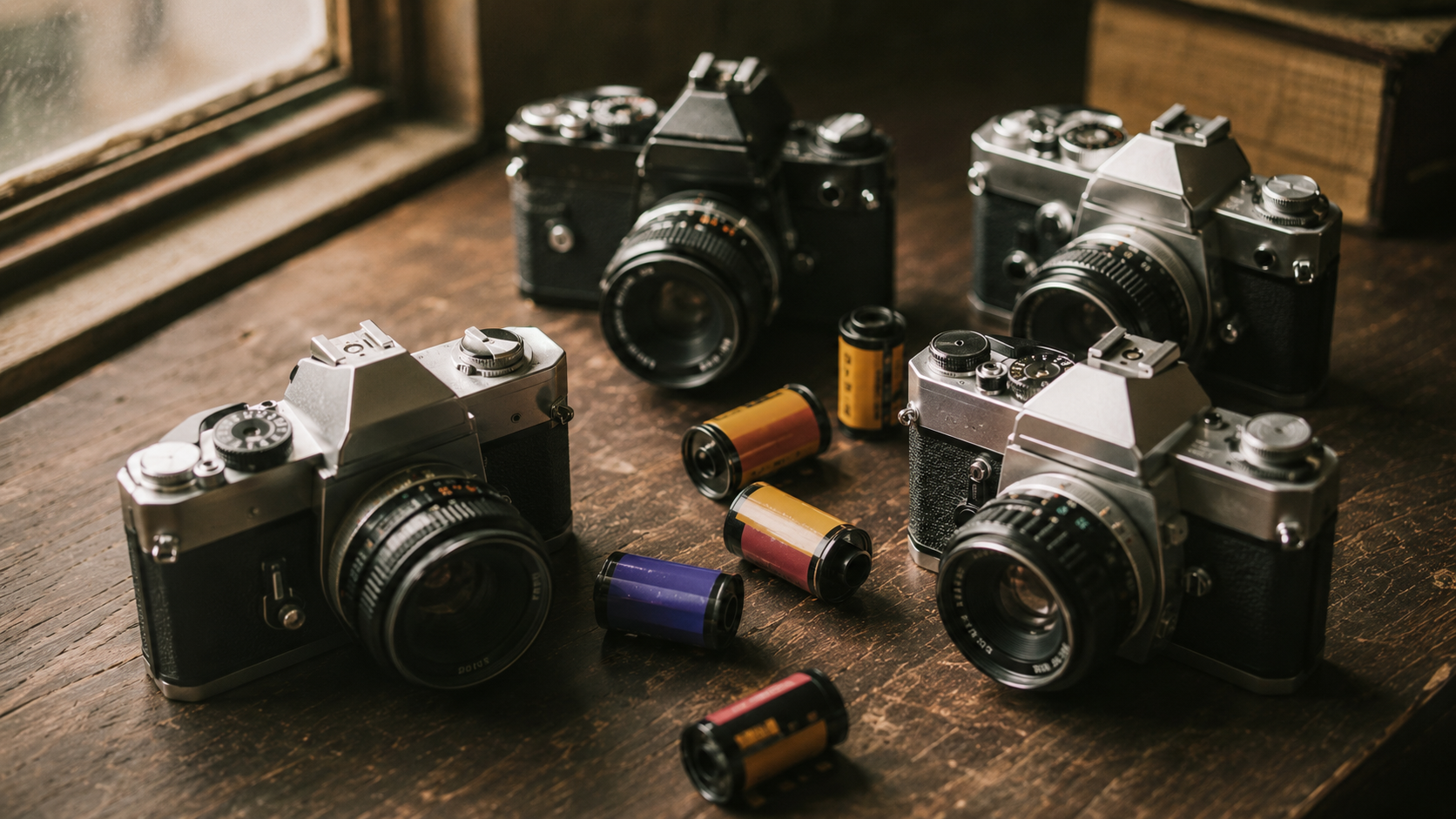
Here it is. A used beginner film camera costs $75-125, once. The film and developing to actually use it costs roughly $360 a year — a $10-15 roll, plus $8-20 to develop and scan it, times maybe a roll a month. That works out to somewhere between $0.50 and $1.30 per photo.
The camera is the cheap part. The film habit is the expensive part. And almost no beginner guide says this out loud, because it doesn’t sell the affiliate link to the camera.
So this guide does it differently. It starts with the running cost, tells you which cheap cameras are genuinely good (and which expensive ones are a trap), and gives you a checklist for not getting burned on a broken used camera — because nearly every beginner film camera is bought used, and used film cameras fail in specific, predictable ways.
The Best Film Camera for Beginners: Cameras Worth Buying
The consensus across film forums and shooters is remarkably consistent, and it’s not the cameras Instagram tells you to buy. It’s the boring, mechanical, repairable workhorses.
Pentax K1000 ($75-125) — the perennial beginner recommendation. Fully manual, fully mechanical, runs without a battery for everything except the light meter. It forces you to learn exposure because nothing is automatic. Indestructible. If you want one camera to learn the actual craft on, this is it.
Canon AE-1 / AE-1 Program ($90-150) — semi-automatic, so gentler on a beginner than the K1000. Aperture-priority-ish shooting modes make your first rolls less daunting. One known issue (covered below): the famous “shutter squeak.”
Olympus OM-10, Minolta X-700, Nikon FE/FG — all in the same tier. Cheap, well-built, plenty of lenses available, easy to repair. Any of them is a fine first camera.
If you want pocketable instead of an SLR, skip the hyped point-and-shoots (more on that next) and look at:
– Olympus XA series — rangefinder-ish, tiny, a fraction of the price of a Contax
– Olympus Trip 35 (~$50) — fully mechanical, no battery, nearly bulletproof
– Canon AF35ML (~$50) — fast f/1.9 lens, cheap
– Nikon L35AF, Pentax PC35AF — competent autofocus point-and-shoots that nobody hyped, so they’re still cheap
A forum user on Photrio put the math bluntly: “For the price of one [Olympus] mju, I could buy an F80 + F75 + F55 and still have money left for film.” That’s the whole point — spend on rolls, not on a logo.
The cameras NOT to buy (and why the hype is a trap)
Here’s where most beginner guides actively hurt you: they recommend the cameras that got expensive because they got famous, not because they’re good for learning.
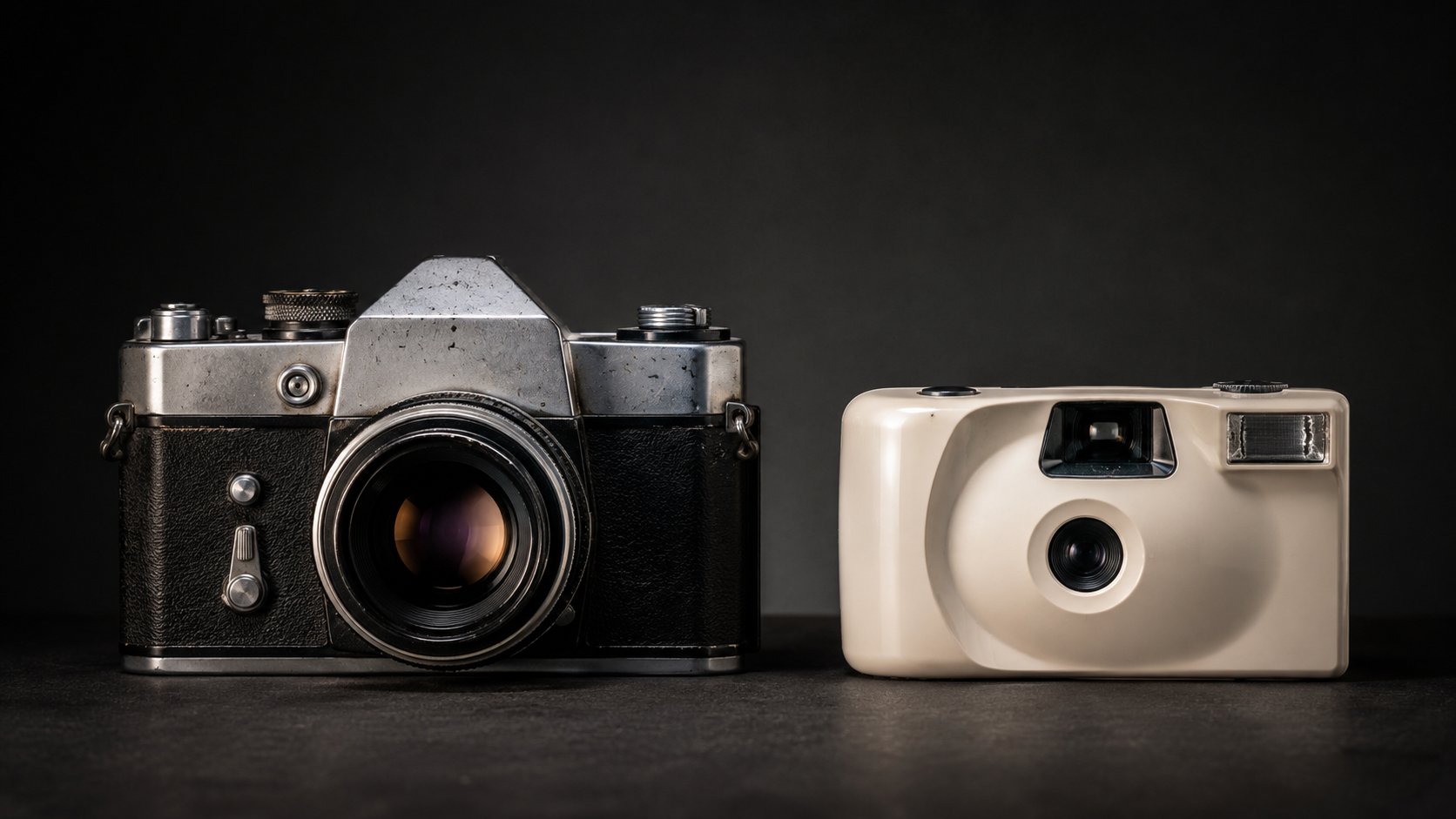
Contax T2 ($1000+) — a competent point-and-shoot that got celebrity-hyped (it blew up around 2017) into absurd money. A reviewer at Casual Photophile who owned one sold it, concluding it was “neither small enough to always carry, nor cheap enough to not care about.” Worse: it’s driven by aging electronics. Drop it or get it wet and it becomes, in one shooter’s words, “the world’s most expensive paperweight” — unlike a mechanical SLR, it can’t be repaired.
Olympus mju II / Stylus Epic ($200-350) — same story, smaller scale. A Photrio user who’s owned several: “It’s a plastic camera, full of cheap plastic parts… not worth spending that kind of money on.” Another: “The EPIC is a $100 camera, tops. You’d have to be a real point-and-shoot addict to pay that.”
Kodak Ektar H35 (new, half-frame plastic) — marketed as a do-everything beginner camera; it’s a plastic toy with a fixed everything. Fine as a novelty, oversold as a starter.
The uncomfortable truth that film blogs like Kosmofoto have pointed out: the “best beginner camera” lists are an echo chamber. Writers cite each other, recommending the same hyped cameras that previous writers recommended, whether or not they actually suit a beginner. A great photo taken on a T2 would look just as good on a $90 AE-1. The camera didn’t take the photo.
How used film cameras fail (the 7-point check before you pay)
This is the section the SERP top 10 skips entirely, and it’s the one that saves you money. Roughly 90% of beginner film cameras are bought used, and used film cameras fail in four classic ways. Check for all of them before handing over cash:
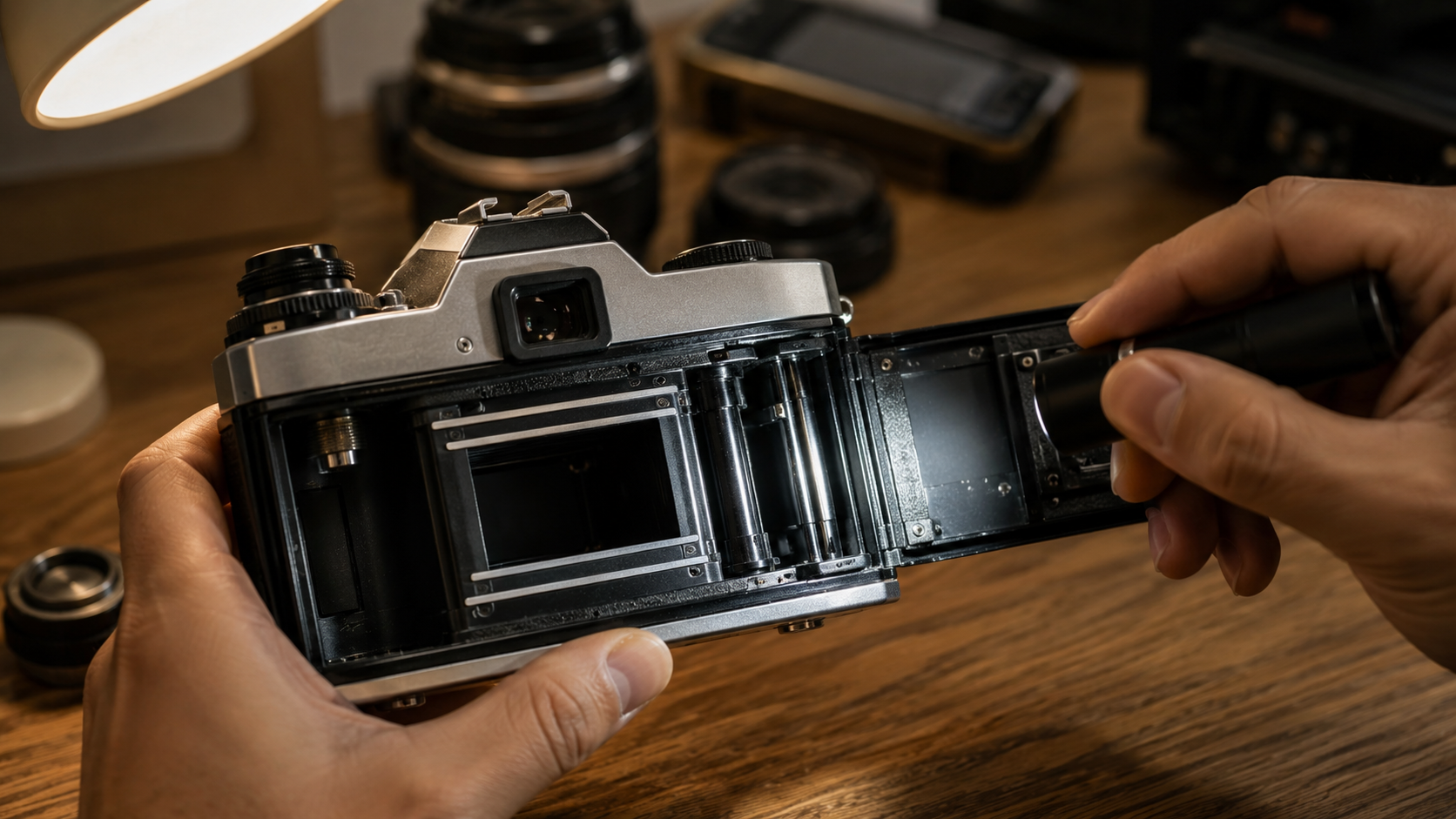
Light seals (the foam around the door). They dry out and crumble with age, and the result is light leaks that ruin entire rolls. A PetaPixel writer’s beloved Mamiya developed leaks mid-life this way. Check: open the back, run a fingernail along the door channel — if the foam is gummy, flaky, or gone, it needs re-sealing (cheap and DIY-able, but factor it in).
Shutter problems. The Canon AE-1 is famous for “shutter squeak” — aged lubricant makes it audibly chirp and the shutter slows down. Check: fire the shutter at several speeds and listen. A loud squeak or sticky/slow shutter means it needs a CLA (clean-lube-adjust).
Dead or inaccurate light meter. A meter that reads wrong means every frame is over- or under-exposed. Check: put a battery in, point at a bright window then a dark corner, and confirm the meter needle/LEDs actually move and respond.
Discontinued batteries. Some old cameras need mercury batteries (banned) or specific voltages; one PetaPixel writer drunk-bought a Contax that used long-discontinued APS film — useless. Check: look up what battery and film format the model needs before buying.
Fungus in the lens. Spider-web-like haze inside the glass. Check: shine a flashlight through the lens and look for webbing or cloudiness.
Smell test. Mold and mustiness mean it was stored badly, which predicts seal and fungus problems. If it smells off, walk away.
Run a test roll. The single best advice from experienced shooters: before you trust a used camera with an important shoot, run one cheap roll through it. As one PetaPixel writer learned the hard way after loading a “good deal” untested camera: “If it’s too good to be true, it is.” Mint cameras at suspiciously low prices “never happen.”
35mm or medium format? Start with 35mm.
You’ll see medium format (120 film) cameras recommended for their image quality, and the quality is real. But for a beginner it’s the wrong start:
- 35mm gives you 24-36 frames per roll; 120 gives you 10-12. More frames means more practice and cheaper per-shot learning.
- 35mm film and cameras are cheaper and more forgiving. 120 is pricier per roll and the cameras cost more.
- The learning is the same. Exposure, composition, and developing logic transfer directly when you move up. Start on 35mm, move to 120 once shooting is second nature.
The real obstacle nobody warns you about: developing
A camera is useless if you can’t get the film developed. Before you buy, check this:
- Is there a lab near you? Many cities have lost their local film labs. If not, you’re mailing rolls away and waiting a week or more per batch.
- Mail-in labs work but add cost and a multi-day delay between shooting and seeing results — which kills the feedback loop beginners need most.
- Home developing (black-and-white especially) is cheaper long-term but is a separate hobby with its own startup cost.
This isn’t a reason not to shoot film. It’s a reason to know what you’re signing up for before the camera arrives and you discover the nearest lab is three states away.
At a glance: buy this, not that
| Goal | Buy (and price) | Avoid | Why |
|---|---|---|---|
| Learn exposure properly | Pentax K1000 ($75-125) | Any auto point-and-shoot | Manual forces you to learn |
| Easiest SLR start | Canon AE-1 ($90-150) | Contax T2 ($1000+) | 1/10 the price, shoots as well |
| Pocketable | Olympus XA / Trip 35 ($50) | Olympus mju II ($200-350) | Hype tax, not quality |
| Tightest budget | Nikon L35AF / Pentax PC35AF | Kodak Ektar H35 | Real glass vs plastic toy |
What it actually costs, year one vs year two
- Year one: ~$560 (camera + a year of film + developing + a few accessories like a strap and a cheap light meter app)
- Year two onward: ~$360 (just film + developing — the camera’s already paid for)
Budget for the film, not the camera. The single most common regret among beginners isn’t buying the wrong camera — it’s underestimating the running cost and then shooting less because each roll feels expensive. Buy a cheaper camera than you think you need, and put the difference toward rolls. You learn by shooting, not by owning.
Bottom line
The best film camera for beginners is almost never the one trending on social media. It’s a $90 mechanical SLR like a Pentax K1000 or Canon AE-1 — bought used, checked carefully for light seals and shutter health, loaded with cheap 35mm film, and shot a lot.
Skip the hyped point-and-shoots; they’re a celebrity tax, not an upgrade. Run a test roll before you trust any used camera. Find your developing solution before you buy. And budget for the film habit, because that — not the camera — is what this hobby actually costs.
Spend less on the body, shoot more rolls. That’s the whole secret.
Sources for the real-world feedback and pricing in this guide: Photrio film community forums, PetaPixel (“69 Mistakes” film photography series), Casual Photophile (Contax T2 long-term review), ShootItWithFilm (beginner camera guidance), Kosmofoto (on the beginner-recommendation echo chamber), and iFixit (Canon AE-1 shutter squeak repair documentation). Cost estimates reflect typical 2026 US film and developing prices.