 Better Photos Guide
 Why most “best crossbody camera bag” lists are useless
Search “camera bag crossbody” right now. Click the top 10 results. Notice something: they all recommend the same 7 cheap Amazon brands (BAGSMART, K&F Concept, Besnfoto, MOSISO) — and zero of them mention Peak Design, Wandrd, Domke, ONA, or Billingham, the bags actual photographers actually carry. Zero real-use photos. Zero negative reviews. Zero stories about anything going wrong.
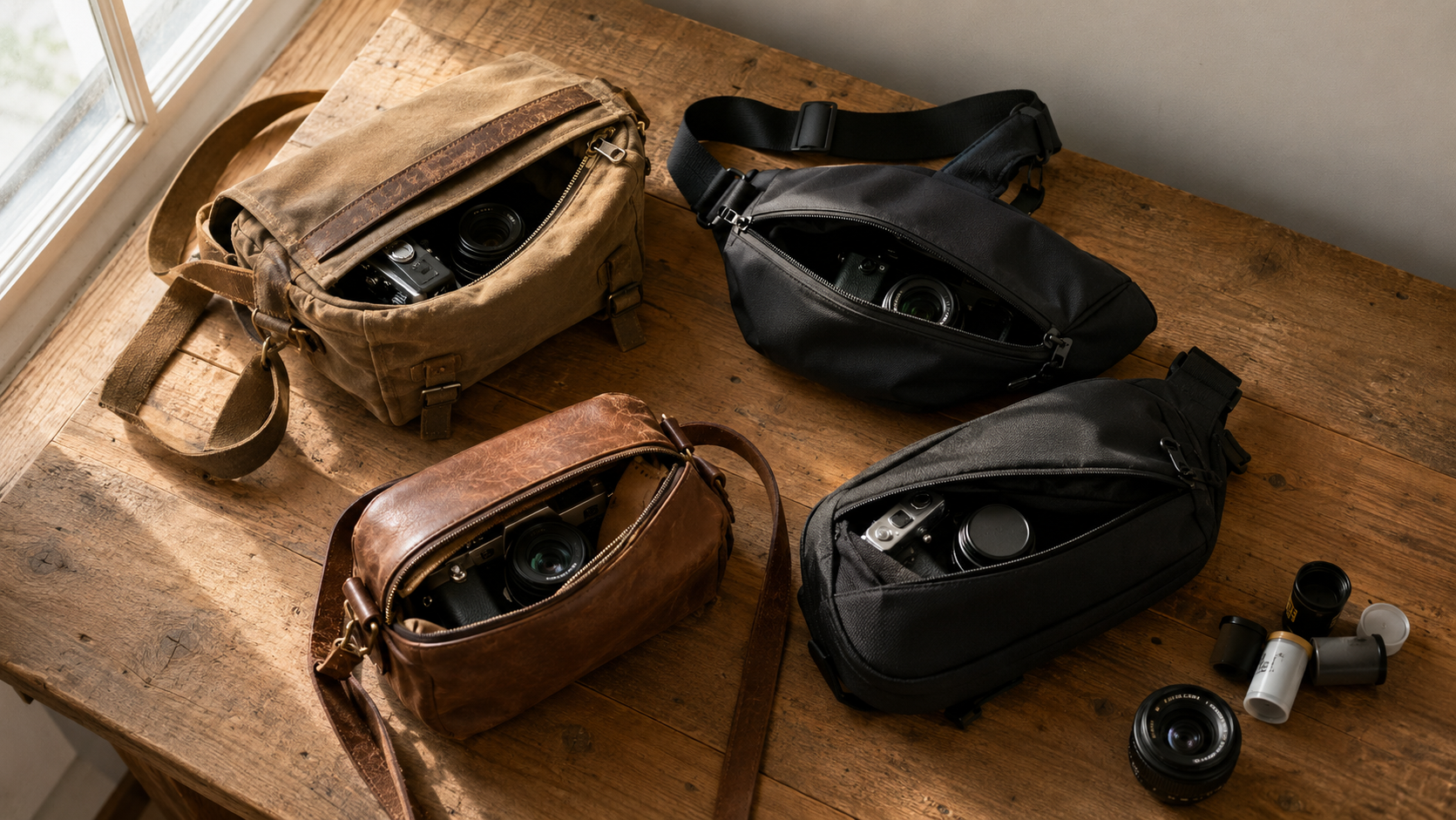
That’s the problem. So this guide does the opposite. Every bag below comes with the specific complaint someone made after owning it — pulled from DPReview threads, Substack long-term reviews, Pack Hacker month-long tests, and one Amazon reviewer who destroyed a Fuji X100F because of a magnetic flap that wouldn’t stay closed.
The bags are organized by what you actually do with them, not by a Top 10 ranking, because the right camera bag crossbody for hiking 8 hours is wrong for street photography in Lisbon — and most lists pretend that distinction doesn’t exist.
3 things most blogs get wrong about crossbody bags
Three patterns repeat across the top 10 listicles — and they’re all half-true.
1. Crossbody bags don’t actually prevent back pain (past 4 hours)
The argument you’ll read: shoulder bags are bad for posture, crossbody distributes weight better. That’s partially right. A crossbody is better than a single-strap shoulder bag because the diagonal load engages both shoulders. But carry a 5+ lb crossbody for more than 3-4 hours and your spine is still loaded asymmetrically — chiropractic sources are consistent on this. For a full day of city walking, a real backpack wins, similar to how a dedicated iPhone editing workflow beats one generic preset. Crossbody is for up to half a day, not all-day.
2. Capacity in liters is not the same as room for your gear
Bag capacity is measured at the outer envelope, including all external pockets and stretched gussets. A Wandrd Rogue 9L doesn’t actually fit 9 liters of camera gear — once the padded dividers, laptop sleeve, and front organizer take their share, the actual camera compartment is closer to 4-5 liters. The Peak Design 10L Sling has the same problem. When a spec sheet says “fits a 70-200mm,” that usually means lens hood reversed, no body attached, and nothing else inside.
3. Single-magnet flap closures fail
ONA Bowery, Billingham Hadley, and a few others use single magnetic snap closures because they look elegant. There is at least one Amazon review on the ONA Bowery describing the flap coming open while walking, and a Fuji X100F sliding out onto pavement (the review is still up, rated 1 star). If the bag holds anything heavier than a phone, you want a double-magnet or a buckle. Aesthetics is not worth a $1400 body.
Which camera bag crossbody is right for you (by use case)
Use case 1: Street photography (priority: invisible)
The right bag here is the one that doesn’t look like a camera bag. Two specific recommendations from photography forums:
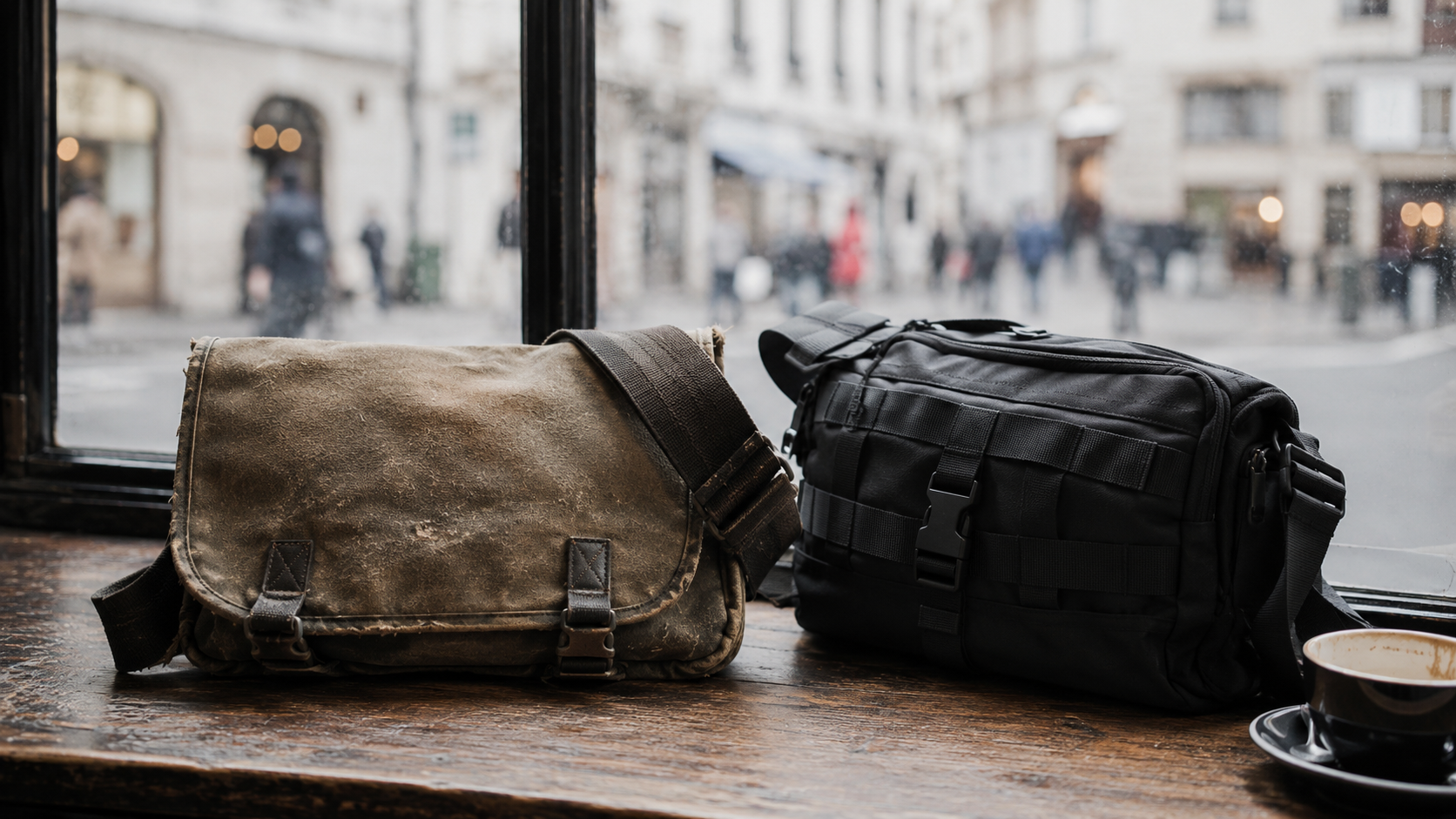
Domke F-803 Waxwear ($209)
The street photographer’s consensus pick on DPReview and Phoblographer. It looks like a waxed canvas mailman bag — and gets more invisible as it ages and the wax patinas. Steve Huff (long-time camera reviewer) has used the same F-803 for over 5 years and described it as “still looking like new.” Fits a mirrorless body plus 2-3 small primes comfortably. The honest downsides: it’s smaller than the photos suggest, won’t fit a 70-200 zoom (for that telephoto load, see our wildlife photography gear guide), and the canvas absorbs water — fine for drizzle, not fine for actual rain.
WotanCraft MINI RIDER V2 4.5L ($169)
This came up in Fstoppers’ annual roundup as the only premium street bag that didn’t have a serious complaint. Waxed canvas, low-profile, takes a Sony A7 + 35mm lens with room for a wallet and phone. The catch: 4.5L means one body + one lens. If you want a backup lens with you, this isn’t it.
Skip Peak Design here. The aesthetics scream “I have an expensive camera,” which is exactly what you don’t want on a street.
Use case 2: Single-day travel (priority: capacity without back pain)
You’re walking around a city for 6-8 hours, switching lenses, and carrying a water bottle and a jacket. This is the sweet spot for medium sling bags — 6L to 10L range.
Peak Design Everyday Sling 6L V2 ($99) — with caveats
This is the default recommendation for a reason: it’s well-built, the Flexfold dividers work, and the 6L size hits the right capacity for a body + 2 lenses + small accessories. But: long-term reviews from Pack Hacker and others flag that the dividers’ edges start fraying within a month, and the bag has a tendency to slide down your back during active use. There’s a stabilizer strap accessory that helps but it costs $20 more.
Think Tank Retrospective 7 ($179)
For Sony A7-class full-frame bodies with a 24-70 lens, multiple DPReview threads recommend this over the PD. Heavier padding, more weatherproof, and the silencer flap (Velcro can be muted) is useful for events. Downside: looks more “photographer” than the PD, so loses points on stealth.
Wandrd Rogue 9L ($199) — only if you really need the extra space
The Rogue gets recommended often but the long-term reviews are blunt: the back panel material starts pilling within two months, and the stabilizer clip “sits right in the middle of the padded back panel and digs into the spine.” If you need 9L, get it. If you can live with 6L, the PD or Think Tank is more comfortable.
Use case 3: Travel with theft risk (Europe, Latin America, transit)
Different problem entirely. The bag needs to resist slashing, the zippers need to lock, and you don’t want anything that looks expensive. This narrows the field hard.
Wandrd Rogue 6L (anti-theft variant) ($179)
Slash-guard mesh in the strap, lockable zipper pulls, and the form factor is small enough to wear in front-cross position on transit. Multiple travel-photography blogs (Indie Traveller, Pack Hacker) cite it as the most-recommended anti-theft crossbody for actual photographers (vs. generic travel slings that don’t fit camera gear).
Pacsafe Camsafe V18 ($120)
Fully anti-theft engineered: slash-guard panels throughout, locking zippers, RFID blocking pocket, security wire in the strap. The catch is weight: the bag weighs 2.09 lbs empty, which is heavier than some camera bodies. Comfortable for a few hours, painful by hour 6.
What to avoid in this category: anything with magnetic flap closure (ONA, Billingham), anything with a Peak Design-style external attachment system (gear is too visible), and anything that advertises itself as a camera bag.
Use case 4: Women — fit, aesthetics, daily carry
Most reviews skip this entirely, so it’s worth a direct mention: the strap angle on “unisex” slings is designed for a flat chest. Strap routes that work fine on a man can dig in or chafe across the chest on a woman. This isn’t theoretical — it’s the single most common complaint in Etsy reviews of women-specific camera bags.
Lo & Sons Pearl ($248)
Designed by a women’s accessories brand, the strap geometry routes around the bust rather than across it. Fits a mirrorless body + 1 lens + everyday carry (wallet, phone, sunglasses). The trade-off is gear capacity: this is a “camera + life” bag, not a “camera kit” bag.
Etsy handmade leather slings ($80-150)
The honest sleeper category. Real buyer reviews consistently mention: better stitch quality than mass-market brands at the same price, custom sizing options, and aesthetic flexibility. The downside: zero padding for the camera, so you supply your own neoprene wrap.
Billingham Hadley Small ($335)
Not gender-specific but the proportions work for smaller frames. Long history of professional use, true weatherproof (not just water-resistant), and double-buckle closure (not magnetic). Expensive but in the “owned for 10 years” tier.
What to avoid: any sling marketed as “women’s” that’s just a unisex bag in a pastel color. The strap angle problem still applies.
The bags that get hyped but shouldn’t (by SERP, anyway)
Three categories of bag dominate the top 10 listicles for “camera bag crossbody” — and none of them actually solve the use-case problem above.
Cheap Amazon-only brands (BAGSMART, K&F Concept, Besnfoto, MOSISO): These dominate Amazon search results and have thousands of 4-star reviews. They share three problems: foam padding compresses within 6 months, zippers fail within a year, and the “leather” is plastic that cracks. Fine for a $30 backup. Not fine if you carry the bag every day.
Generic “travel slings” sold as camera bags (Osprey Daylite, Patagonia Atom): These are real bags but they’re not camera bags. No padded dividers, no weather sealing for gear, no quick-access camera compartment. Photographers buy these because they look casual, then realize a lens is bouncing freely against a water bottle — same risk applies if you carry a macro photography tripod in a non-camera bag. Don’t.
Old-school designer brands at modern prices (Oberwerth $599+): Beautifully made, real leather, real craftsmanship. Also: heavy, expensive, and the leather scratches the moment you set it down on a sidewalk. If you have $600 for a bag, the Domke + Billingham combo gets you two purpose-built bags for the same money.
A real story about why bag closure matters
This is from an Amazon review of the ONA Bowery, dated 2023. The reviewer was walking with the bag — magnetic flap closure, single magnet — and the flap came open without them noticing. A Fuji X100F slid out and hit pavement. The reviewer rated it 1 star, returned the bag, and the review is still up.
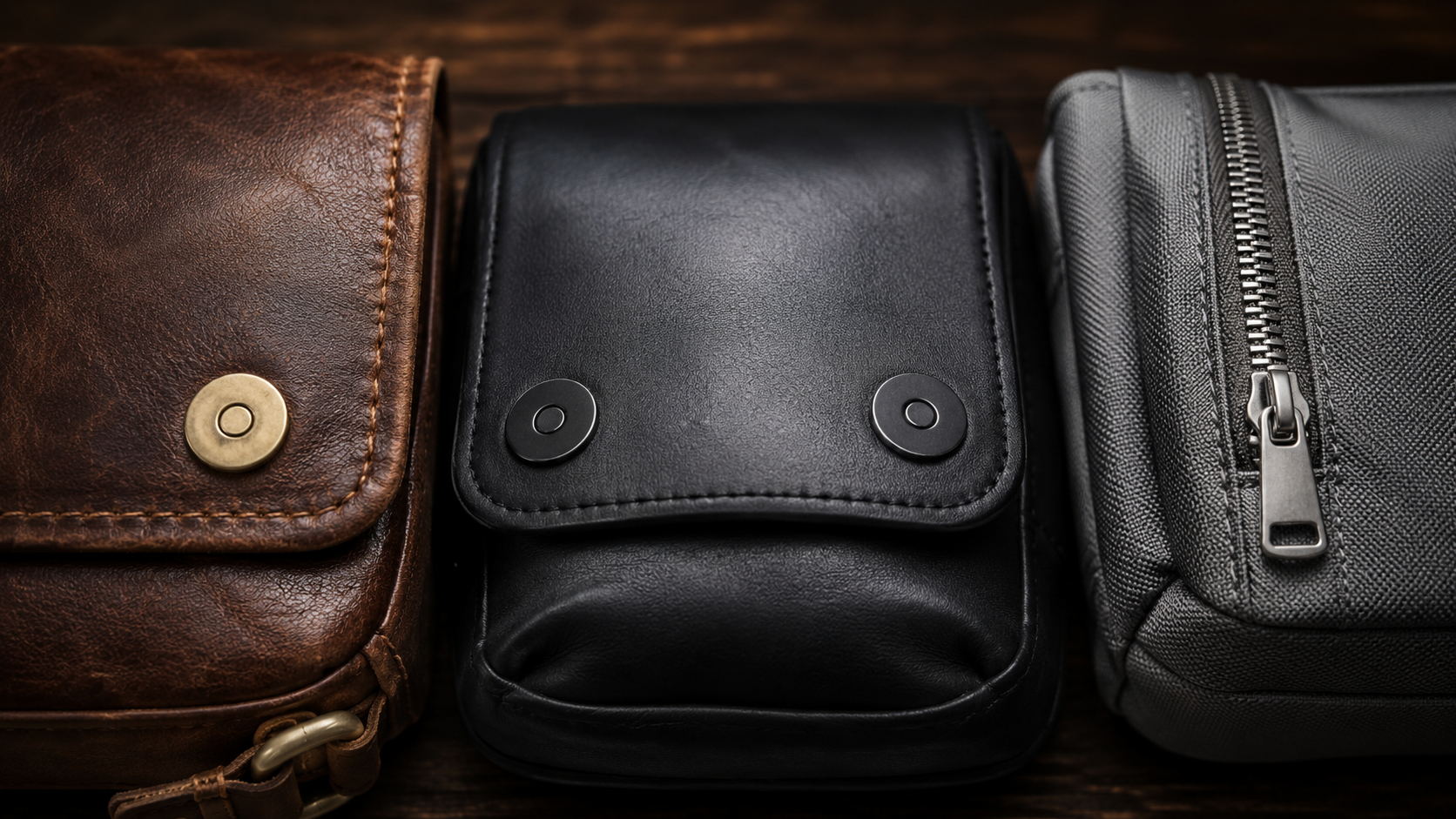
The point isn’t that ONA bags are bad (they’re well made, the leather versions are gorgeous). The point is that a single-magnet closure has a real failure mode. Two reviews of the same bag elsewhere mention the same thing happening with less expensive cameras. SERP top 10 doesn’t mention this. Every bag recommendation in this guide above either uses a buckle, a double-magnet, or a zipper for that reason.
Check the closure mechanism before buying. If it relies on one magnet to hold the weight of your most expensive lens, that’s a design risk, not a feature.
At a glance: 9 camera bag crossbody picks, honest verdicts
| Bag | Best for | Price | Capacity | Honest downside |
|---|---|---|---|---|
| Domke F-803 | Street photo | $209 | 1 body + 2-3 primes | Smaller than photos suggest, no rain protection |
| WotanCraft MINI RIDER V2 | Street, premium | $169 | 1 body + 1 lens | Too small for a 2-lens day |
| PD Everyday Sling 6L | All-around city | $99 | Body + 2 lenses + small kit | Dividers fray, bag slides during active use |
| Think Tank Retrospective 7 | Full-frame travel | $179 | Body + 70-200 zoom | Looks like a camera bag |
| Wandrd Rogue 6L | Anti-theft travel | $179 | Body + 1-2 lenses | Strap material pills, clip digs in back |
| Pacsafe Camsafe V18 | Maximum security | $120 | Body + 1-2 lenses | 2 lbs empty, fatiguing all day |
| Lo & Sons Pearl | Women, daily life | $248 | Body + 1 lens + EDC | Limited camera kit capacity |
| Etsy handmade leather | Women, aesthetic | $80-150 | Varies | No internal padding |
| Billingham Hadley Small | Long-term investment | $335 | Body + 2 lenses + iPad | Expensive upfront |
What about Peak Design specifically?
It’s the most-recommended brand in every SERP listicle, so it deserves a direct answer: the Peak Design Everyday Sling is good, not great, and the long-term reviews are more critical than the top 10 lists suggest.
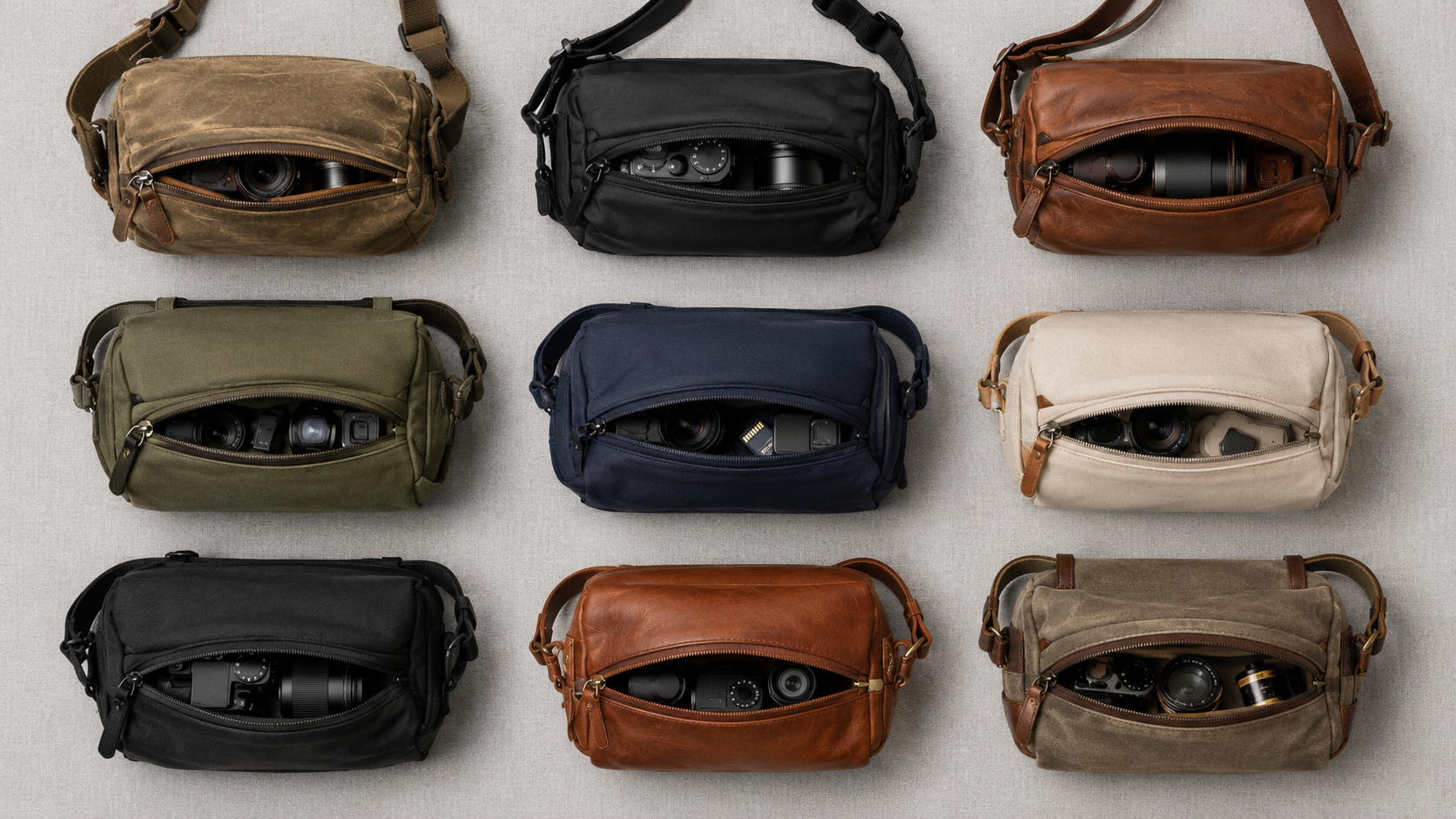
What it does well: build quality is real, the Flexfold divider system is the best in the category, accessory ecosystem is huge, and the warranty is industry-leading.
What it does poorly (from multi-month reviews): divider edges fray within 1-2 months. The bag’s bottom isn’t flat — sets it on a table and it tends to roll forward. The shoulder strap slips on active wear. The front pocket has limited access if the main compartment is full.
Verdict: if you want one bag and the use case is “city, walking, switching lenses,” the PD 6L is fine. If your use case is more specific (stealth, anti-theft, women’s fit, full-frame zoom), there’s a better bag for your situation.
Camera bag crossbody: 4 questions to ask before buying
- How many hours per day will you wear it loaded? Over 4 hours, eliminate single-magnet closures and anything over 1.5 lbs empty.
- Will the bag ever be in a crowd (subway, market, festival)? If yes, eliminate magnetic closures and external attachment points. Slash-guard mesh or locking zippers become must-have.
- What’s the biggest lens you’ll carry? Under 50mm prime: any bag works. 24-70 zoom: needs a 6L+ with real padding. 70-200: probably the wrong format, get a backpack.
- Do you want it to look like a camera bag, or specifically not? Domke and WotanCraft hide it. PD and Wandrd look like camera gear. ONA and Billingham split the difference.
Answered honestly, those four cut the list of nine down to two or three.
So which one should you actually buy
There is no single best crossbody camera bag because there is no single best use case. The shortlist by situation:
- Street photographer: Domke F-803
- City walker, all-around: PD Everyday Sling 6L (knowing the dividers will fray)
- Travel with theft risk: Wandrd Rogue 6L
- Women, daily carry: Lo & Sons Pearl or an Etsy leather sling
- Long-term investment piece: Billingham Hadley Small
What’s in the bag, how heavy it is, and where you walk with it matters more than the brand on the front.
Sources for the failure modes and long-term reviews in this guide: Pack Hacker (multi-month wear tests), DPReview forums (community long-term threads), Indie Traveller and Carryology (travel-specific reviews), Substack reviewers (Wandrd Rogue 9L 2-month review), Amazon 1-2 star reviews (for specific failure cases), Steve Huff and Phoblographer (street photography community).